Building date:
Original use:
Corner structures: Red sandstone
Mortar application and content: Vertical no embellishment
Types and uses of stones:
Types and choice of windows: Red stone, solid lintels
Structures with similar masonry details:
Masons who worked on building:
Unique features:
Map views courtesy Google Maps. Street level view of residence is intentionally blurred, assumed to be a privacy request; however, Google Maps does provide an aerial view. Address is Google Earth confirmed; 43°17'11.72"N 77°43'56.20"W. Current owner of record, Finegan as of the 2018 Tax Roll.
Town of Greece and Monroe County Maps.
"The Cobblestone Houses of Upstate New York", compiled by Dorothy Wells Pease 1941. Research done in collaboration with Hazel B. Jeffery, supplemented with material furnished by Carl F. Schmidt. Reference the seventh paragraph on page 2.
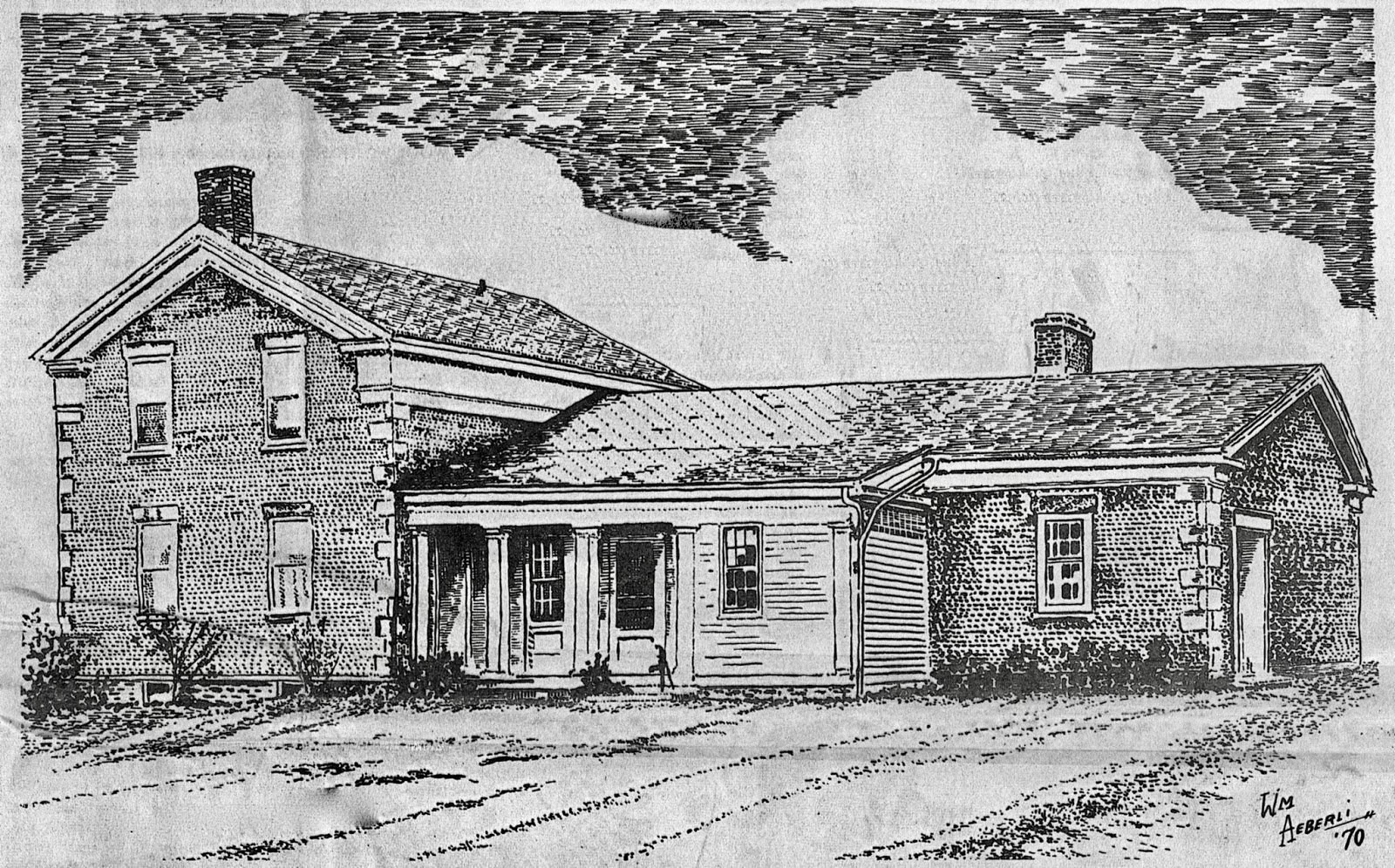
"The Old Cobblestone House on the Hill" ¹, By William Aeberli, The Greece Post, December 24, 1970
¹ Editor's Note: Link is to actual newspaper article. Text below is a transcription.
On an abrupt rise where Frisbee Hill Road meets North Greece Road, a 19th century cobblestone landmark stands as a reminder of a particular period in our rural past. The property's elevation permits a lovely uninterrupted panorama of the wide, green plain below, leading the eye across the countryside to the Ridge and beyond to the horizon.
The old cobblestone farm house, more than 125 years of aging charm, is the home of Mr. and Mrs. Stanley Hazen, 149 N. Greece Rd. Here on this site in 1845, one Edwin Davis patiently gathered, sorted and laid up a unique form of stone wall masonry and contributed, probably unwittingly, to the phenomenon of our Western New York cobblestone architecture.
In 1856, Lucius Bagley purchased the house from Davis and brought his wife and three children from Kendall to settle and farm the surrounding 100 acre tract. Great grandfather Lucius' descendants occupied the cobblestone house continuously for 97 years. Mrs. Rosella Bagley Flint, who lives next door at 141 N. Greece Rd., and her cousin, Harold Nellis, are responsible for the historical resources I am fortunate to be using.
Great grandfather Lucius had three children, twin sons Henry Joel and Hendrick, and a daughter, Lorraine. Henry Joel worked the farm and lived here until his death at the age of 90 in 1942. Grandfather Henry also had three children: two sons, Lucius and Fay, and a daughter, Ruby. Fay Bagley, born in the cobblestone house in 1882, was Roselle Bagley Flint's father. He built the house she occupied next to her grandfather's cobblestone dwelling.''
Daughter Ruby married Morton Nellis; they had two sons, Henry and Harold. Fay married Anna Rowley, having but one child, daughter Rosella. Lucius Bagley never married. Lucius Bagley was the custodian at Greece Town Hall for many years and was one of the first volunteers in the county to enlist in the U. S.Navy during World War 1, serving at Norfolk, Virginia, the battleship U.S.S. Iowa. Grandfather Henry Joel was a Deacon and life-long member of First Baptist Church in Hilton.
Nellis told me his grandfather never missed a Sunday service, even when the mud was up to the hub caps of his buggy wheels. Henry Joel would often relate the tale of an old Civil War veteran by the name of John Stothard, who paid frequent calls at the cobblestone house. The old soldier was proud to tell one and all that he helped collect the cobblestones for Davis when a small boy many years before.
The original farm bordered line (now private residential property) and squared around to the woods in the west and back. There was an orchard below for years until 1922, when unrelenting subzero temperatures wiped out the trees. A new orchard was planted on the hill - cherry and peach trees were added.
There were eight cows pastured and the farm grew beans, corn, wheat and hay. The barn in the rear of the property was destroyed by fire in 1968. Ironically, the barn had replaced previous one destroyed by flames years ago.
Nellis remarked that it was a standing tradition among the Bagley descendants to celebrate Christmas Day with grandfather Henry Joel at the old cobblestone farm house. He can still remember the traditional oyster bucket placed in a comer of the front porch in freezing weather to keep until supper time. Also, the times he would watch his grandfather salting and preparing bacon and hams to hang in the cobblestone smokehouse that remains by the driveway today.
Little school children would come down from the school on Frisbee Hill with pails to fetch their drinking water from the pump by the front porch. Their teachers were often boarded at the cobblestone house during the school season.
After the death of Henry Joel Bagley in 1942, daughter Ruby and husband retuned to the cobblestone house to live. The Lane family purchased the old farm house in 1953-4 and lived here until the Hazens obtained the dwelling in 1958.
The cobblestone house on top of the hill, one of the three remaining in the Town of Greece (the Christian Church on Latta Rd. was demolished) has not changed its appearance since 1845. The Hazens, charter members of the Cobblestone Society, added a west wing in 1961 to the rear of the two-story portion. The wing can be seen only from the south coming towards the property; the addition seems to enhance and add to the rustic appearance of the old stone walls.
The Hazens must be commended for their perseverance in tastefully preserving their historical home both to the exterior and interior portions. They fully realize their cobblestone dwelling is a never-to-be-duplicated architectural phenomenon; the deed to this house is also a deed to tangible history.
Cobblestone masonry began around 1825, blossomed during the 1840s and finalized during the Civil War years. Field stones and cobblestones (of various sizes and shapes) from farm land, creek beds, gravel pits and the lake shore were gathered and used as the material for laying up a new and specific kind of a wall; not merely for the foundation but the whole structure of a house or church.
Born of the mason's mind, enhanced by his craftsmanship and ingenuity, a great share of his secrets went with him to the grave. Many people, such as the Hazens, are helping to preserve what remains of the old time mason's genius. Peculiar to Western New York, many other cobblestone houses still dot the scenes of our countryside - east and south of Rochester and along the Ridge Road (and side roads) into Orleans and Niagara counties to the west.
Space does not permit more than a short description of the exterior and interior renovations and additions of the Hazen house. Yet (as usual) it begins with the kitchen. The old wood shed area was not attached to the house but was always located within at the far end of the one story wing. There was an entrance way here and the old doorway and steps heading to the basement. This area is now the kitchen with all the modern conveniences, built-in oven, etc.
The old kitchen pantry are is now the dining room. A charming pre-colonial fireplace was erected with Dutch oven. The fireplace acts as the brick-walled separation between kitchen and dining room. The mantelpiece of the fireplace is a large hand-cut square timber removed from the attic.
A large bay window was added to the west rear wall permitting an unlimited amount of sunshine to bathe the dining area. The bay window was built over a stone foundation made from stones removed from the wall, it does not detract from the original wall on the exterior side.
The west rear walk was laid up with large fieldstone and flush mortar joints common to cobblestone masonry work. The smaller, selected stones are found on the sides of more intricate work on the front facing the road.
The exterior rear was allowed to remain exposed when building the west win addition, although the room is not flat but peaked. Also, the exterior wall was not plastered over from within, adding a rustic and natural effect to the first bedroom's decor.
The Hazens enlarged their cellar area under the addition with outside entrance by means of a recessed door with steps covered with steel bulkhead. The casing of the old rear window was used for the shell of the doorway into the hallway to the two bedrooms and entrance to the cellar. All the floors are the original 4" to 6" wide pine planks (many of the upstairs floor boards are 9") and were sanded down completely and covered with fresh finish, revealing the natural hue of the wood.
The old parlor is now the Hazen's living room. Although the outside entrance to this area remains, the door was moved from the inside to the outside casing; the space behind the door became a closet. Built-in shelves in the closet are closed off from the living room by means of louvered doors. Book shelves were built along the west partition of the living room and window casings extended from 2" to 4" to allow for insulation. The walls around the cobblestone house vary in thickness from 14" to 16"; 19" under the two-story portion. One basement wall is 4 feet thick.
There is a new first floor bathroom between the living room and west wing addition. The entrance hall between the dining room and living room contains a large closet; the ceiling of the closet has covered opening to permit access to attic by means of a step ladder. The one story wing's attic is independent of the two-story attic section.
The second floor has been redecorated and especially the second floor bathroom, once part of a second bedroom off the main bedroom. The original decayed floor boards of the recessed porch were removed and new planks were nailed into place.
The original small bedroom north of this recessed part was remodeled into a study. New floor boards had to replace the old because the sills were found to have dry-rot and the only way to get at the sills was removal of the floor boards.
Another example of preserving the exterior decor was the utilization of the old chimney on the one-story wing. Adding a new, modern heating system as well as the fireplace would have called for two chimneys. The Hazens solved this by rebuilding the original chimney with two flues - one for the exhaust from the heating system, the other for the fireplace. The old chimney on the two-story portion was allowed to remain but sealed off.
Thus, the old cobblestone farm house retains its rural, exterior dress, yet tasteful planning has transformed the dwelling into a modern up-to-date home. There is a definite feeling of preservation from within with no sacrificing the conveniences of utility, interior decorations and livability we demand today in our homes. Richard Palmer blog.
Realty information page, date unknown.
First Floor Plan by Carl F. Schmidt.
Bicentennial Snapshot #29 Cobblestone Houses Part 1, October 4, 2022 by Pat Worboys and Maureen Whalen. Greece Historical Society & Museum
The Cobblestone Society & Museum Tours:
Hazon House 20th Annual 06/07/1980
- "Cobblestone Masonry", 1966, Carl Schmidt: Name reference, Davis - Hazon House
- Page 47
 149 North Greece Road.jpg ¹ | 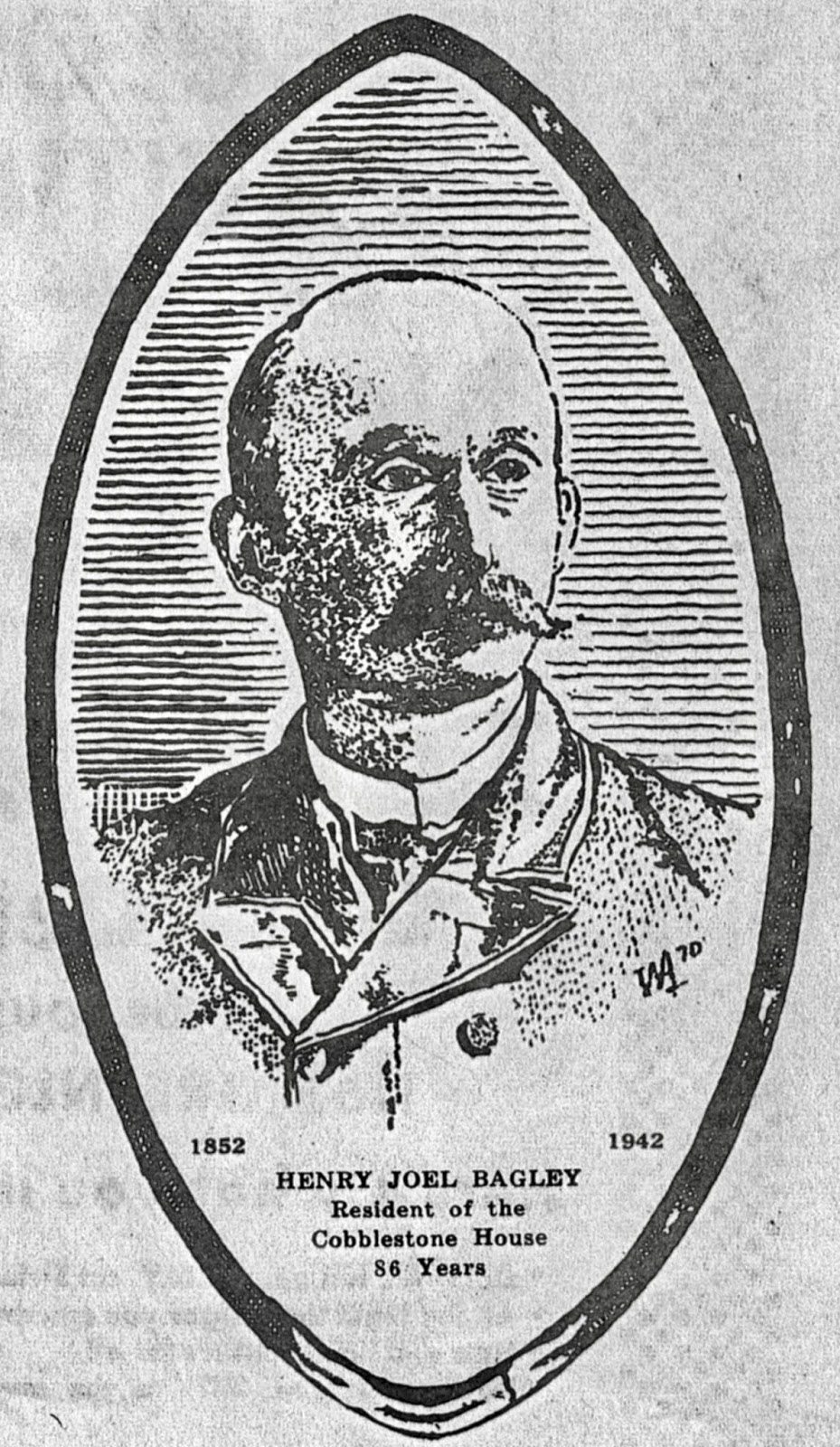 Henry Joel Bagley.jpg ¹ Henry Joel Bagley (1851-1942) resided in this house 86 years. | 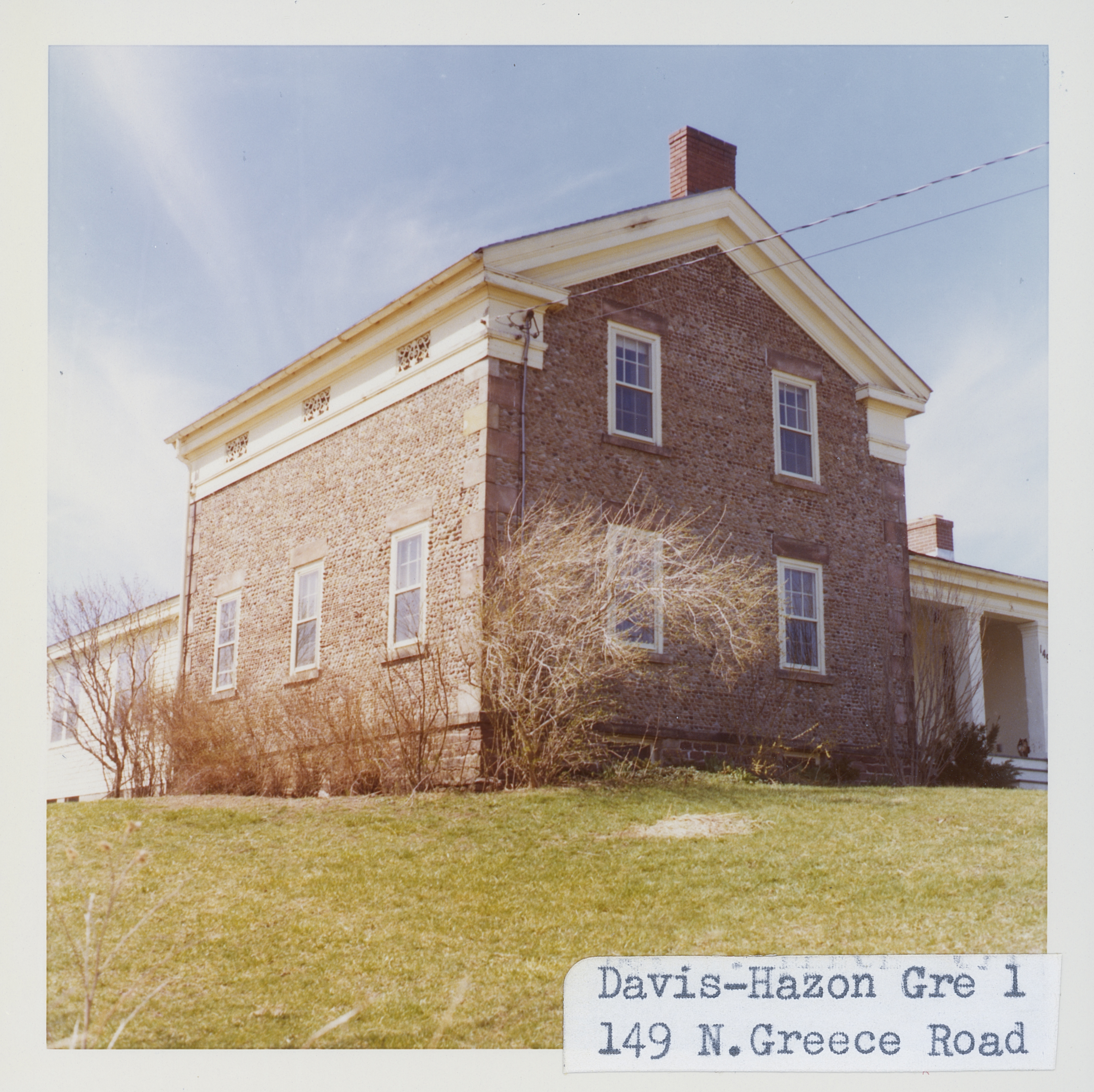 Gre_1_1.jpg | 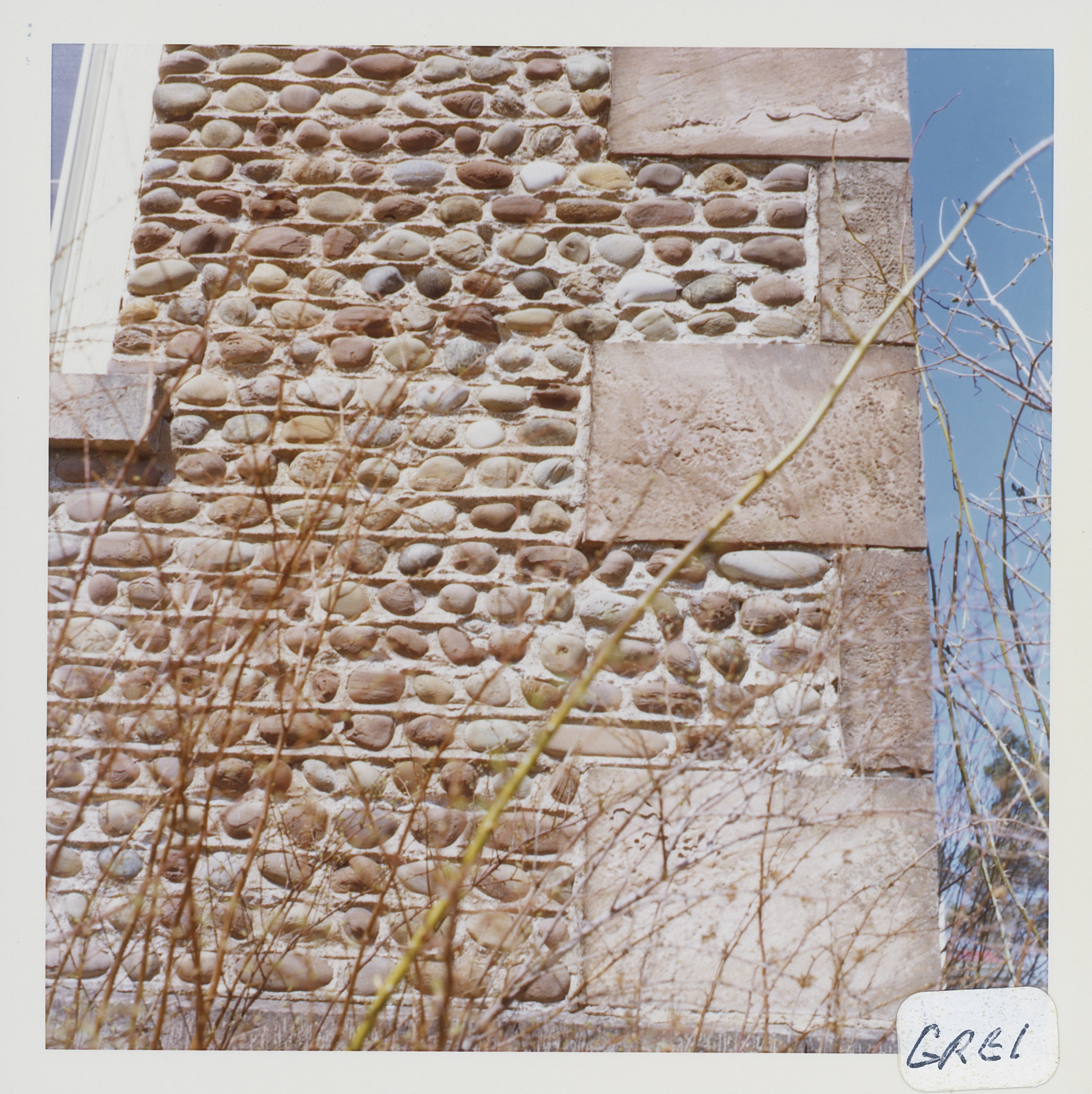 Gre_1_2.jpg |
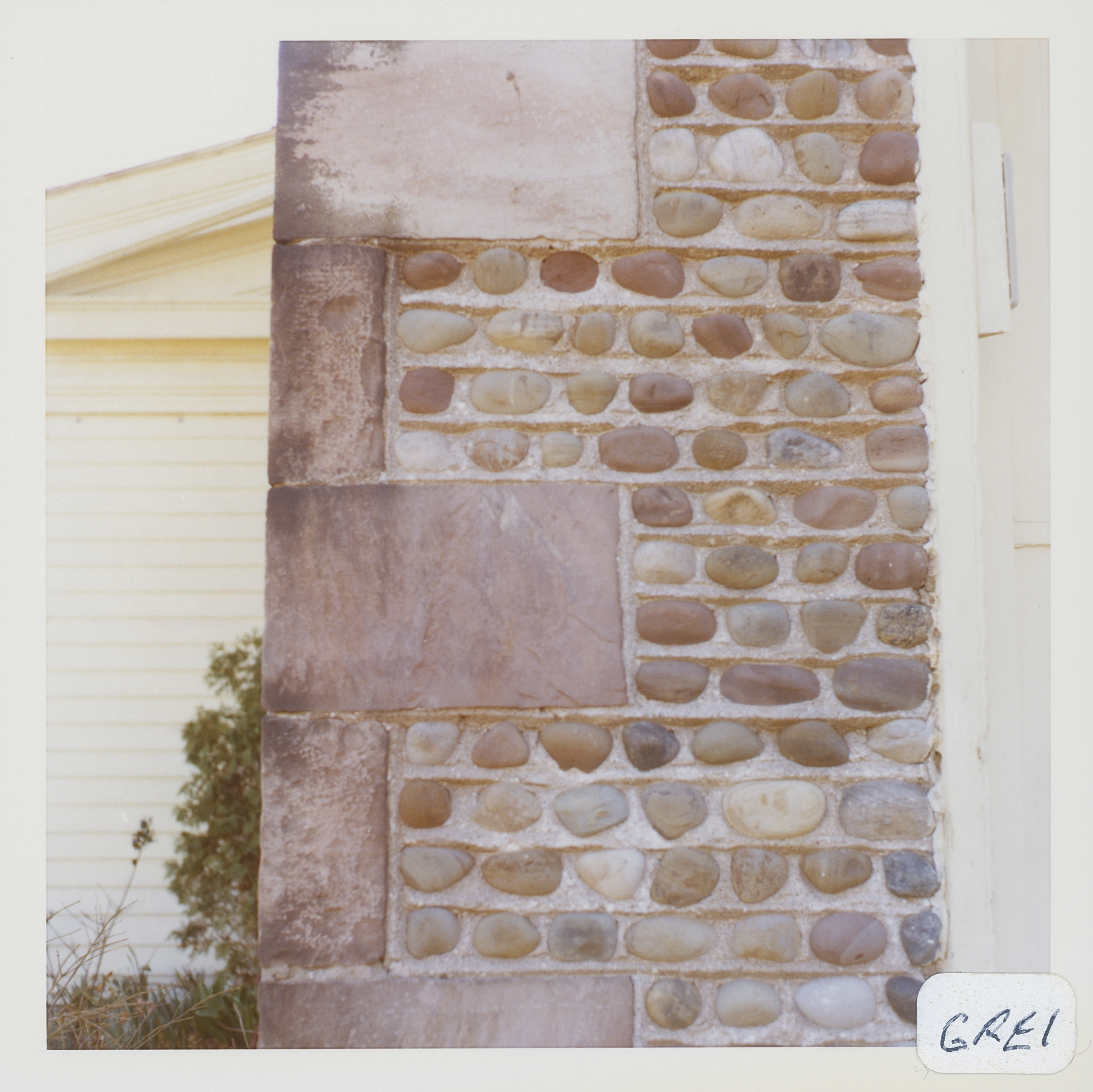 Gre_1_3.jpg | 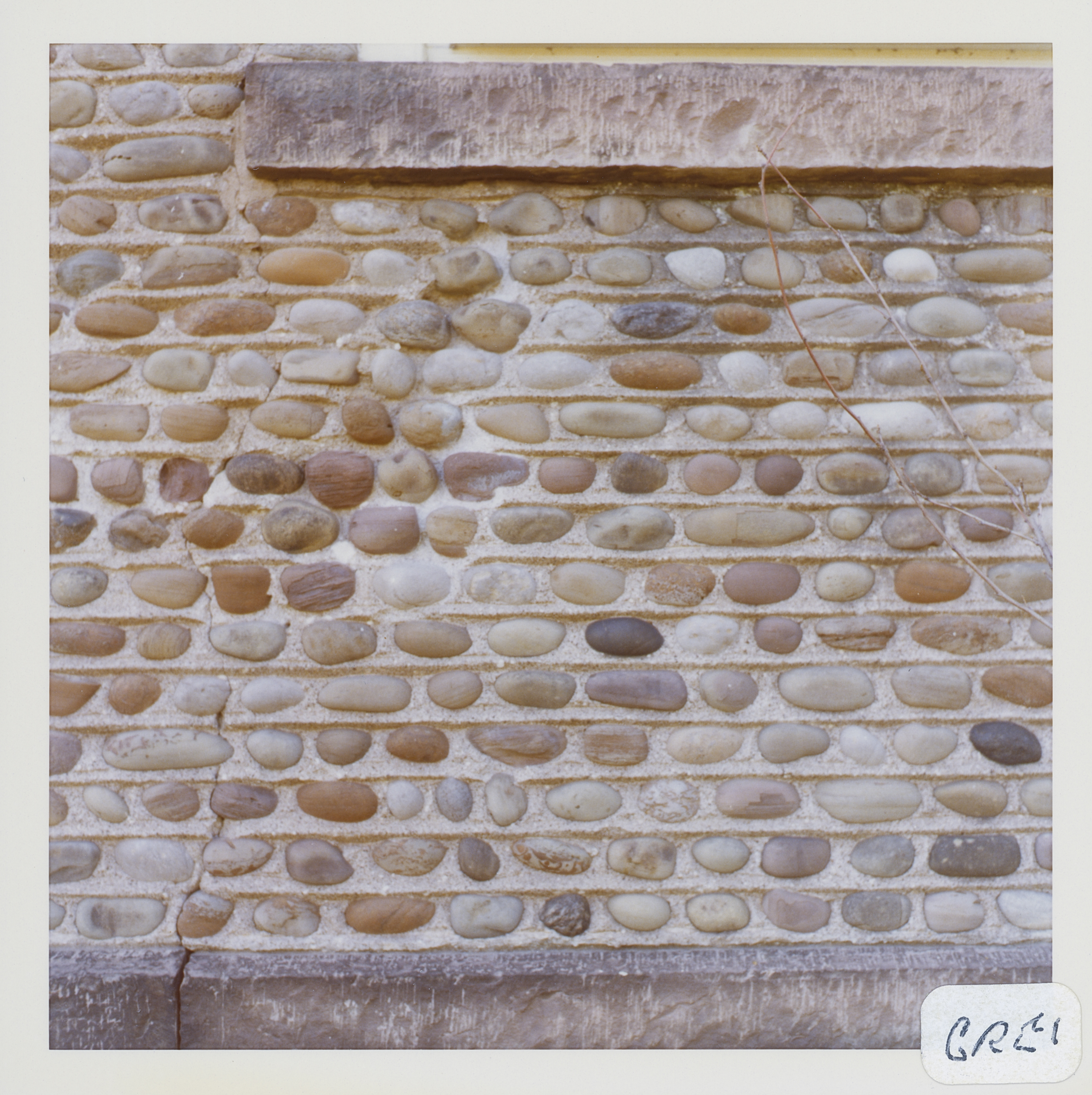 Gre_1_4.jpg |  Gre-1 Davis-Hazon 1.jpg ¹ |  Gre-1 Davis-Hazon 2.jpg ¹ |
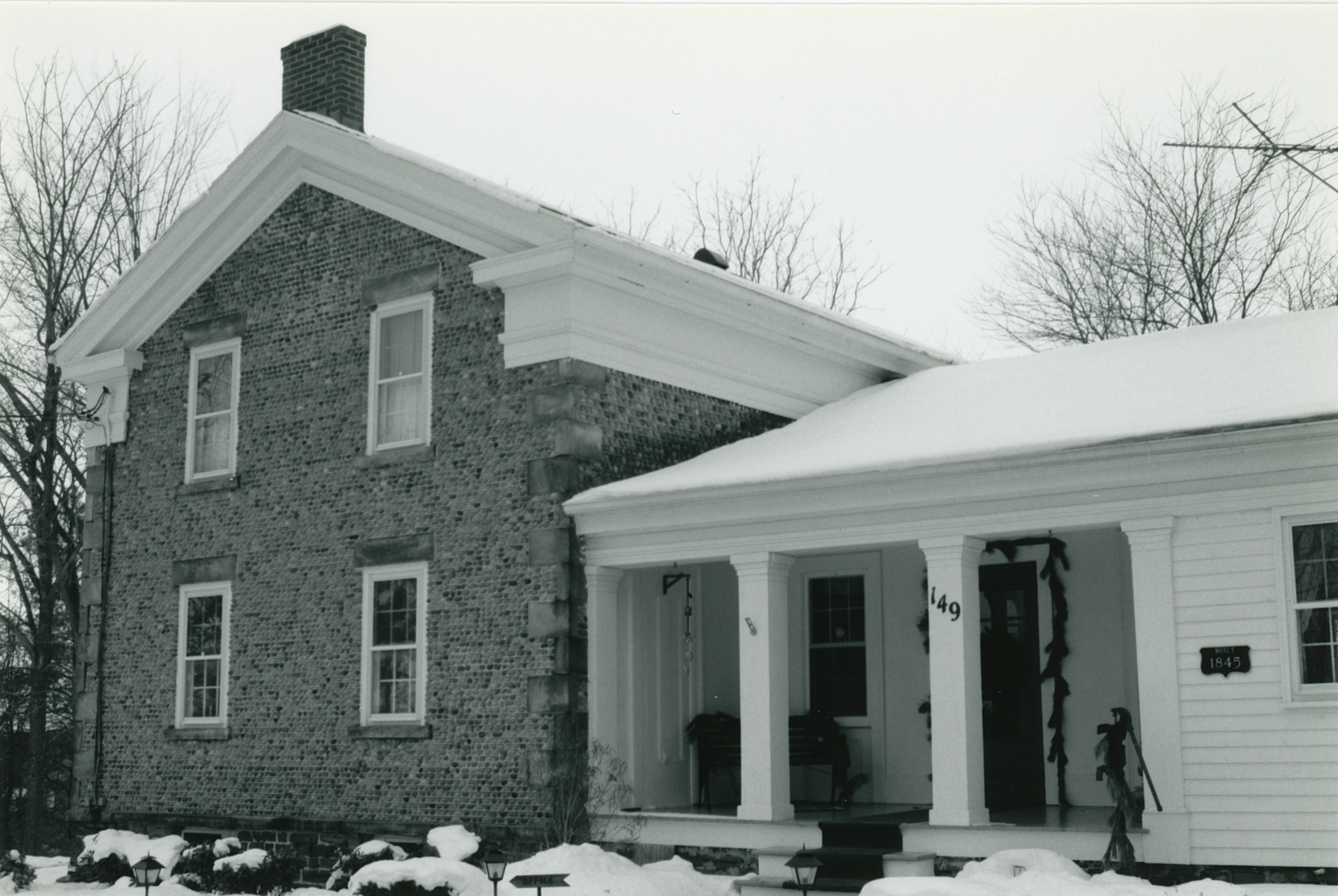 Gre-1 149 N. Greece Rd 1.jpg ² | 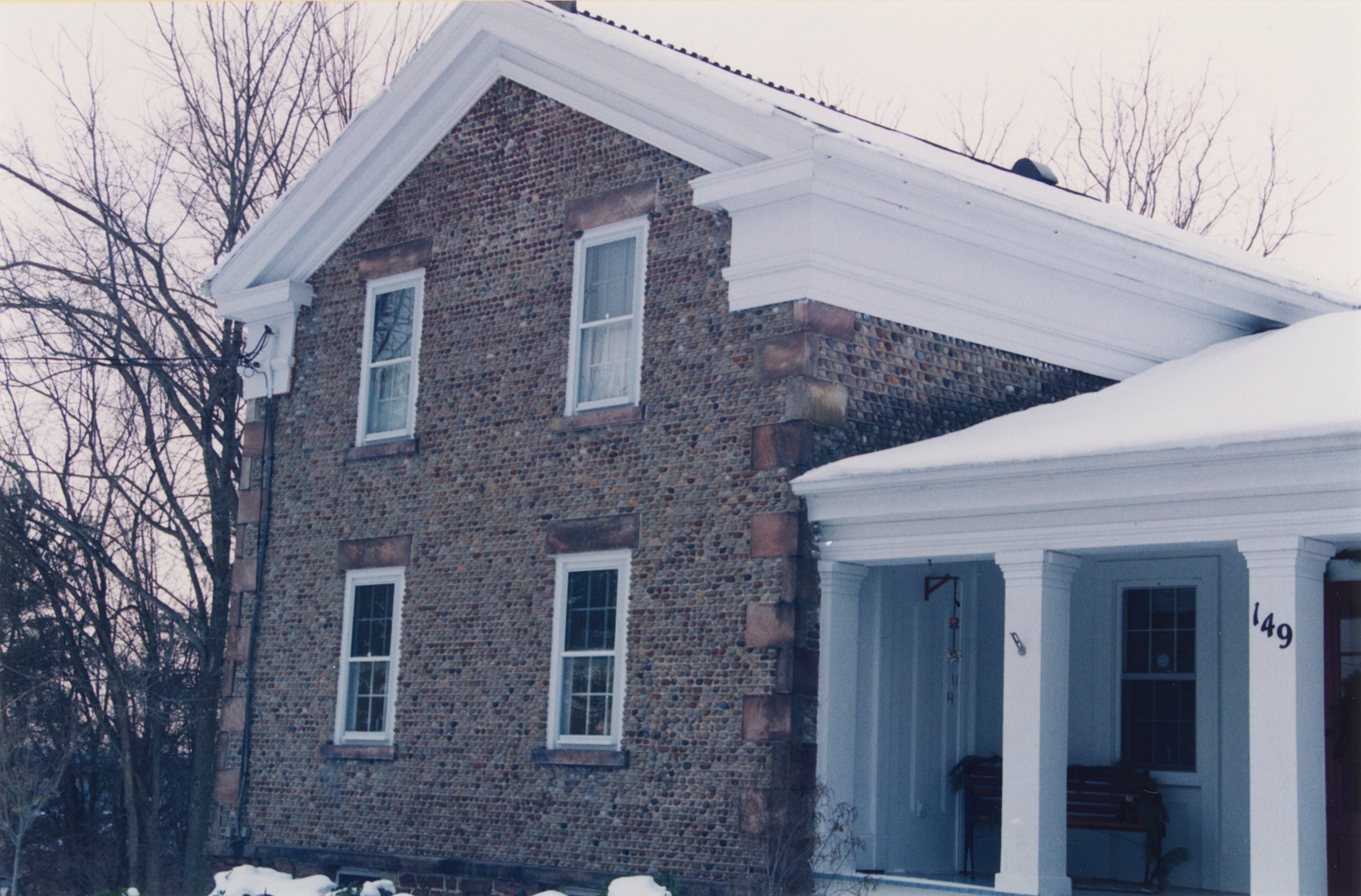 Gre-1 149 N. Greece Rd 2.jpg ² | 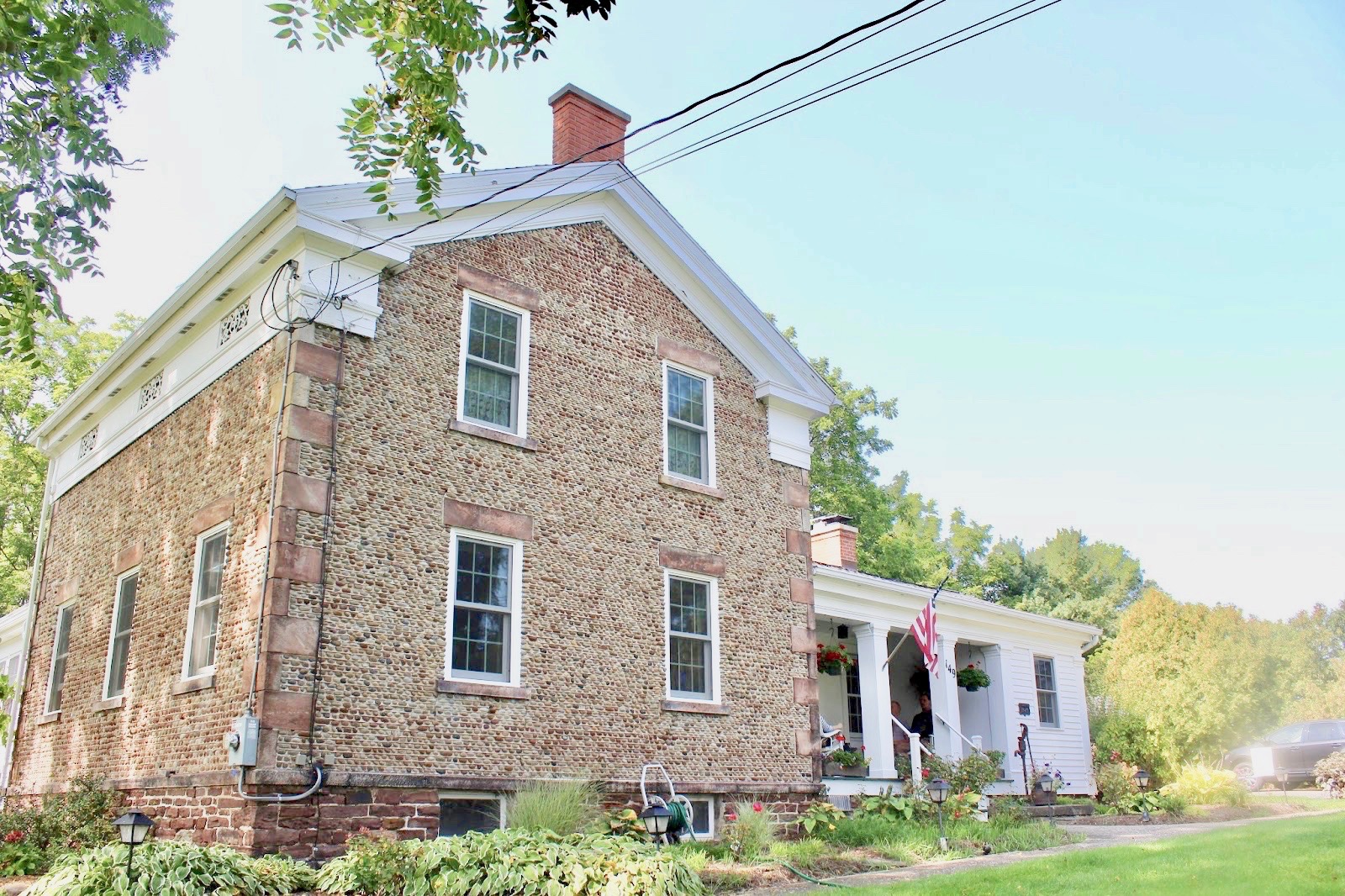 149 North Greece Rd 2.jpg ³ |
¹ Image courtesy Cobblestone Museum.
² Photography courtesy Martin and Sheila Wolfish.
³ Photography courtesy Richard Palmer.
